
Heat Induction Fiberglass Liner Removal
Faster. Safer. Eco-friendly
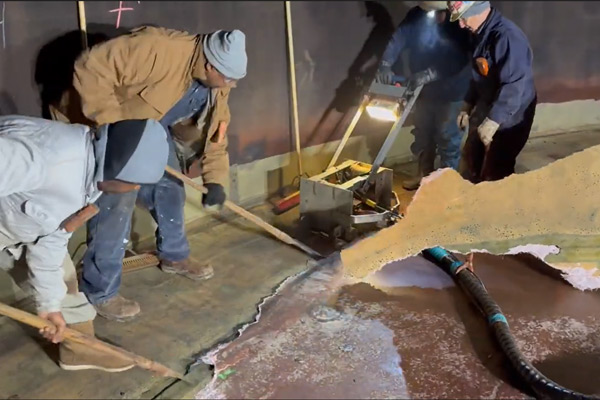
Removing a failed or aging fiberglass (FRP) liner has traditionally meant abrasive blasting or high-pressure water jetting. Both are slow and messy, and they leave you paying to haul away spent media or wastewater. Supreme uses magnetic heat induction instead, the fastest of all fiberglass removal methods. It gets your tank stripped and back on schedule with very little dust and minimal waste.
How It Works
Heat induction uses high-frequency magnetic fields to heat the steel underneath the liner, not the liner itself. That quick, localized heat breaks the adhesive bond between the steel and the fiberglass, so our crews can scrape the liner away cleanly. No open flame and no chemicals touch your tank.
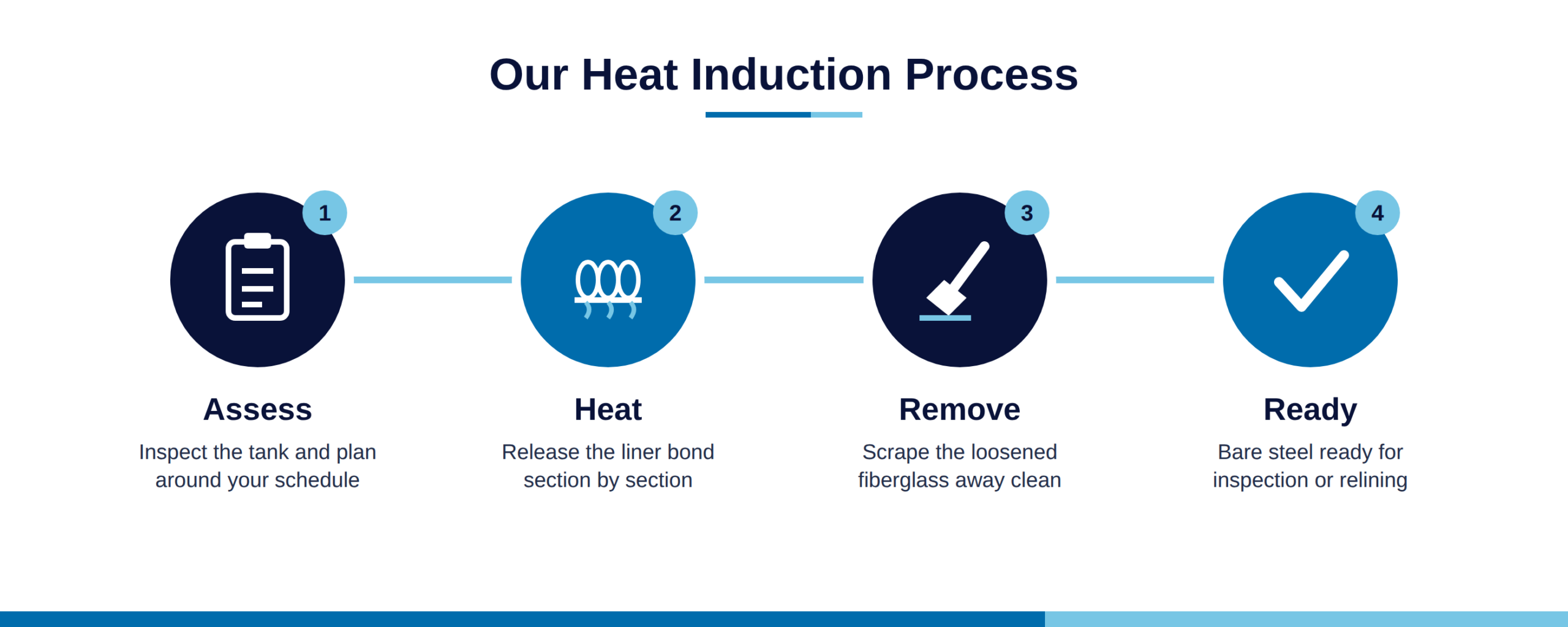
- Assess: We inspect the tank and liner and plan the removal around your schedule.
- Heat: The induction equipment releases the bond between the liner and the steel, section by section.
- Remove: Crews scrape the loosened fiberglass away cleanly.
- Ready: The bare steel is ready for inspection, repair, or a new lining system
Why Heat Induction?
- Fastest removal method: less time out of service for your tank.
- Very low dust: a cleaner, safer work area for your team and ours.
- Minimal waste: no spent blast media or wastewater to dispose of.
- Precise and controlled: heat goes only where it’s needed.
- Quiet operation: far less noise than blasting or jetting.
- Any laminate thickness: works on thin and thick fiberglass alike.
Because it avoids the hazards of conventional wet and abrasive blasting, heat induction reduces the risk of injury and cuts waste disposal costs. That adds up to real savings in both budget and schedule.
Is Heat Induction Right for Your Tank?
Heat induction works on fiberglass applied over a conductive substrate, such as a steel tank floor or shell. That makes it ideal for FRP-lined steel tank bottoms. For other substrates, or where the job calls for something different, we’ll recommend the best removal method for your situation.
From Removal to Relining: One Contractor
Once the old liner is off, our Painting division can take your tank the rest of the way: surface preparation, inspection support, and installation of a new liner or protective coating. You get one contractor and one schedule, without coordinating hand-offs between companies.